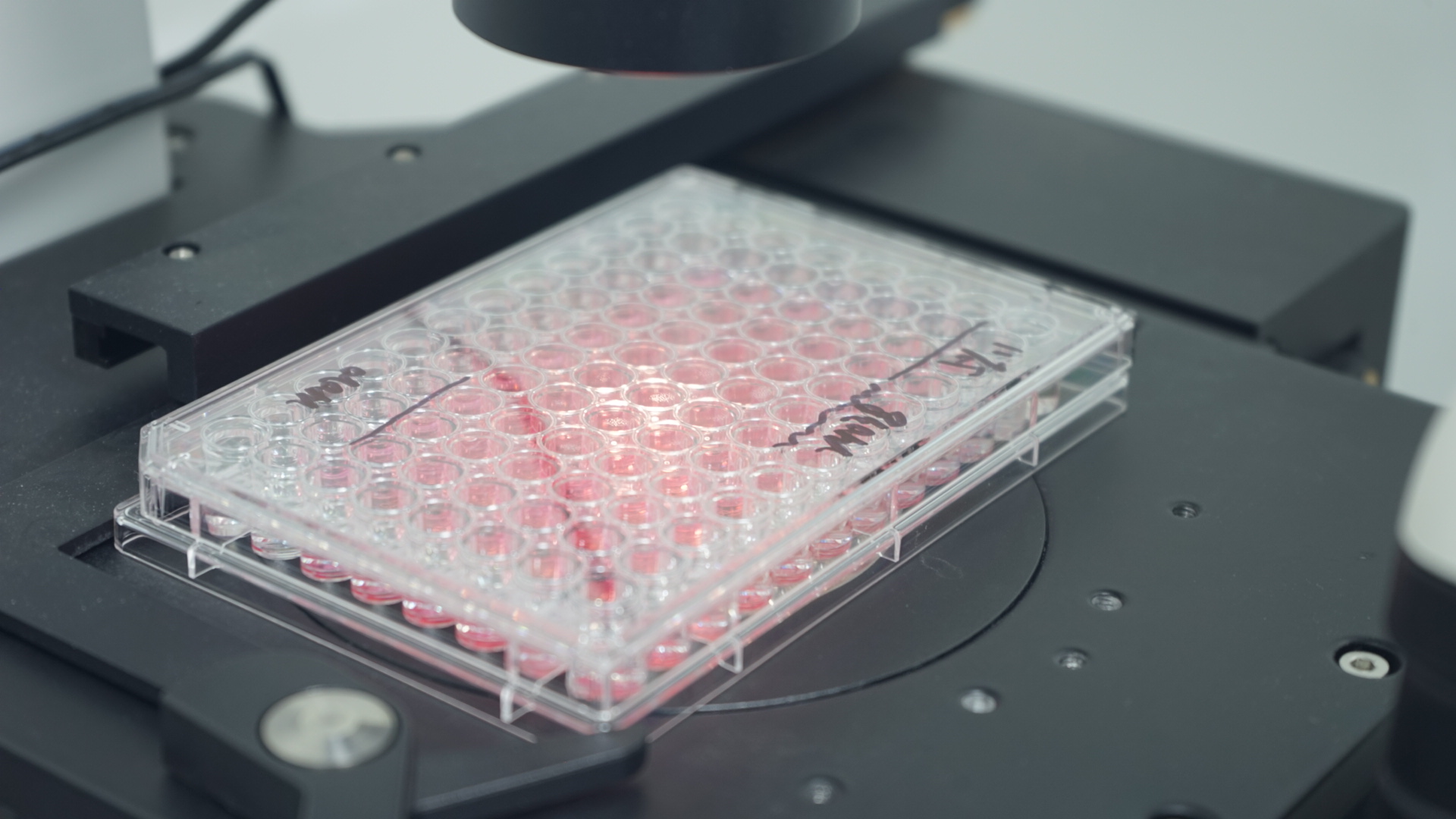

In the world of cell culture, RAW264.7 is a special presence.
It is a mouse macrophage cell line, and fields such as immunology, inflammation, oncology, and drug screening deal with it almost every day. But anyone who has cultured it knows —This cell line has a bad temper and a mind of its own.With a little carelessness, it becomes “polarized”: extending pseudopodia, spreading and adhering, turning into a spindle-shaped or polygonal form, and even starting to phagocytose and secrete factors.
For many experiments,the most important prerequisite is preciselythat they do not polarize. For example, in drug regulation or gene function studies, you want to see real changes induced by the drug, not false positives caused by the cells actively differentiating on their own.
So here comes the question:How exactly should RAW264.7 be cultured so that it stays nicely round and undifferentiated?
1. Three typical states of RAW264.7
First, learn to read its appearance. The first lesson in culturing RAW264.7 is to understand its mood through the microscope.
| Status | Morphological characteristics | What does it represent? |
|---|---|---|
| Undifferentiated (Ideal) | Round, bright, with good refractility, in suspension or semi-adherent, easily detached by gentle pipetting. | The cells are in a resting state, which is most suitable for comparative experiments before and after stimulation. |
| Partially differentiated (Caution) | Cells extend a few pseudopodia, becoming irregular or small spindle-shaped. They can still be passaged, but their state has already changed. | Suboptimal culture conditions (serum stimulation, too low density, endotoxin, etc.), experimental results begin to become uncontrollable. |
| Fully differentiated (Discard) | Cells spread into large patches, become spindle-shaped or polygonal, adhere firmly, and are difficult to detach by pipetting. | Essentially differentiated into a macrophage-like phenotype, no longer suitable for studies requiring a resting state. |
What troubles many beginners the most is: they looked round just yesterday, but today after a medium change, they’ve all spread out. What’s the problem?In most cases, the serum is to blame.
2. Six key points for RAW264.7 culture
(1). Serum is the biggest variable — don’t let it cause polarization.
RAW264.7 is extremely sensitive to endotoxins, hormones, and growth factors in serum. Ordinary fetal bovine serum may contain trace amounts of LPS (lipopolysaccharide) or other stimulants, which can induce M1 polarization in RAW264.7 even at very low concentrations.
Solution:
Choose fetal bovine serum with extremely low endotoxin levels and stable batch-to-batch consistency.Our premium/special grade fetal bovine serumis tested for endotoxin at ≤5 EU/mL per batch (often even lower in practice) and contains no LPS-like bioactive substances. When culturing RAW264.7 with our serum,the cells maintain a round, non-polarized resting state for extended periods,remaining morphologically stable even after more than 10 passages.
Many laboratories have tested our serum, and the conclusion is consistent:with the same cells, after switching to our serum, they became round.
(2)Density control: not too dense, nor too sparse.
- Too dense: contact inhibition occurs, leading to spontaneous differentiation.
- Too sparse: cells struggling alone, also prone to spreading.
Recommended passage ratio:1:3 to 1:6, passage every 2–3 days. It is best to passage when the cells are maintained at 70%–80% confluency. Do not let the cells reach 100% confluency, otherwise extensive differentiation will occur.
(3) Passage method: gently pipette, do not scrape hard.
RAW264.7 cells are semi-adherent. During passaging, wash once with PBS, add trypsin (0.05% with EDTA) to cover for 1–2 minutes, gently tap the culture dish, and observe under a microscope. When the cells become rounded but have not completely detached, immediately stop digestion by adding serum-containing culture medium.
Avoid usinga cell scraper or vigorous pipetting — that will damage the cell membrane and induce a stress response.
(4)Medium change frequency: Don’t be too diligent.
RAW264.7 cells are very sensitive to stimulation by fresh serum. Frequent medium changes (e.g., every day) is like repeatedly giving them a “shot of adrenaline.” Generally, changing the medium every 2 days is sufficient, or change it during passaging.
(5)Avoid sources of endotoxin contamination.
In addition to serum, culture media, PBS, trypsin, and even pipette tips can introduce endotoxins. It is recommended touse endotoxin-free PBS and culture media,and to pay attention to aseptic details during operation.
(6) Mycoplasma contamination – the invisible driver of polarization
Mycoplasma contamination does not necessarily cause the culture medium to become turbid, but it can continuously activate the immune response of RAW264.7 cells, leading to gradual differentiation. If you find that cell condition has inexplicably deteriorated or morphology has changed, it is recommended to test for mycoplasma. We provide aMycoplasma Removal Reagentthat can prevent or eliminate contamination with low cytotoxicity.
3. Our serum keeps RAW264.7 from “growing up.”
Not all fetal bovine sera are suitable for culturing RAW264.7. We specifically use RAW264.7 as aquality control cell line,and every batch of serum is validated by RAW264.7 culture before release:
- ✅After more than 5 consecutive passages, the cells remain round, bright, and unpolarized.
- ✅Endotoxin detection ≤5 EU/mL
- ✅Mycoplasma-free, virus-free, and BVDV-free
- ✅Support batch reservation to ensure long-term experimental consistency.
Many customers have reported that after switching to our serum, RAW264.7 cells finally “behave.” They no longer readily spread and differentiate, the experimental background for drug stimulation is clean, and data reproducibility is greatly improved.
4. A tip: When is polarization needed?
Of course, some experiments do require RAW264.7 cells to polarize into macrophages (for example, for phagocytosis or inflammatory cytokine release). In such cases, you can stimulate them with LPS (100 ng/mL) or IFN‑γ.However, note that the results are reliable only when you start stimulation from the resting, round state.If the cells are already partially differentiated, adding stimulation will lead to different baselines, and the data will not be comparable.
Therefore, the core strategy for culturing RAW264.7 is:keep it round and “asleep” under normal conditions, and wake it up only when needed.
Summary:
RAW264.7 is not difficult to culture, as long as you understand it.
It fears stimulation, endotoxins, improper density, and mycoplasma.
And what it fears most is a “bad-tempered” bottle of serum.
We manufacture fetal bovine serum, and we also act as the “guardian” of RAW264.7.
If you are struggling with the condition of this cell line, give our serum a try —
keep it round, just as it should be.
Feel free to contact us to request a trial sample of serum specifically for RAW264.7.
(You can also use our new press-to-mix culture medium, low-endotoxin PBS, penicillin-streptomycin, and mycoplasma removal reagent as a complete system, making RAW264.7 culture simple and stable.)
Hello, this is a comment. To moderate, edit, or delete it, please visit the dashboard's comments interface. The commenter's avatar is from Gravatar.